Ceramic Fiber Tape with Aluminum: efficient thermal protection for industrial applications
In industry, temperature control is not only important to ensure the proper functioning of equipment, but also...
Read more
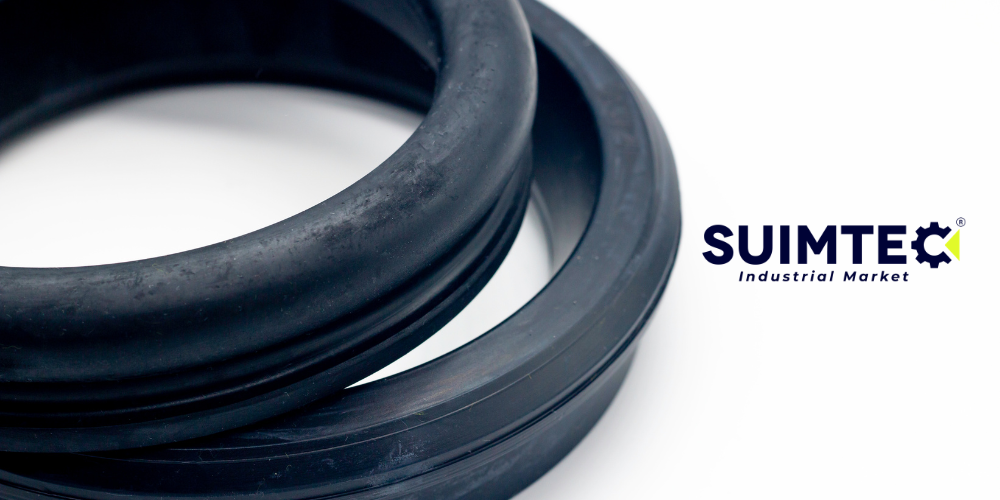
The materials industry is undergoing a transformation driven by the need for greater performance, durability, and process efficiency. Within this context, the Innovation in technical plastics and rubbers It has become a key factor in improving industrial competitiveness.
These materials no longer only fulfill basic functions, but are being designed to respond to specific conditions, optimizing performance in demanding applications.
The industrial technical plastics They have evolved significantly in recent years. Materials such as ultra-high molecular weight polyethylene (UHMW), nylon, acetal (POM), and PTFE have improved their properties through advanced formulation processes.
Today, these materials offer greater wear resistance, improved friction performance, and greater dimensional stability. This has allowed for the replacement of metal components in many applications, reducing weight and improving operational efficiency.
Furthermore, innovation in plastics includes the development of materials with non-stick, anti-static properties and resistance to extreme chemical conditions.
Integrated keywords: industrial engineering plastics, innovation in engineering plastics, advanced plastic materials.
In the case of the industrial rubbers, Innovation has focused on improving chemical resistance, durability, and performance under extreme temperatures.
The development of more specialized compounds allows materials like EPDM, NBR, or neoprene to perform more precisely depending on the application. This includes greater resistance to oils, improved vapor resistance, and greater stability outdoors.
Rubbers with improved damping properties have also been developed, making them more efficient in vibration and impact control applications.
Integrated keywords: innovation in industrial rubbers, advanced elastomers, industrial technical rubbers.
One of the main trends in innovation is personalization. Materials are no longer designed generically, but to fulfill specific functions within a process.
This has led to the development of solutions tailored to sectors such as the food, pharmaceutical, mining, and energy industries. For example, certified food-grade plastics, rubbers resistant to specific chemicals, and materials designed for high friction.
This specialization allows for improved performance and reduced failures.
Innovation in engineering plastics and rubbers not only seeks to improve the material itself, but also its impact on operations. More durable materials reduce maintenance, minimize downtime, and improve process continuity.
In addition, lighter and more durable solutions contribute to energy efficiency and resource optimization.
The use of innovative materials allows companies to improve their competitiveness. More efficient equipment, less wear and tear, and a longer lifespan are direct benefits of implementing these materials.
In an environment where optimization is key, innovation in materials becomes a strategic advantage.
The Innovation in technical plastics and rubbers It is redefining how the industry approaches its processes. More specialized, resistant, and efficient materials allow for improved performance and reduced operating costs.
At Suimtec we work with innovative materials, aligned with current market needs, offering solutions in technical plastics and industrial rubbers for demanding applications.

In industry, temperature control is not only important to ensure the proper functioning of equipment, but also...
Read more
In any industrial process where liquids, gases, or steam circulate, an efficient sealing system is essential to maintain...
Read more English
  Español
  Français
  Português do Brasil
  简体中文
简体中文  日本語
日本語